The father of the bride is giving his speech. He’s funny, he’s emotional, he’s been practicing this for months. And his wife, your mom, is watching him through her phone screen. You’ll see it in every photo. And so will she, when she looks back.
More and more couples are choosing to have an unplugged wedding, and as a Washington DC wedding photographer, I’ve seen firsthand how much it changes the atmosphere in the room. And in the images.
If you’re on the fence about it, this post will walk you through everything, the honest pros and cons, exactly what to say, and how to make it work without making your guests feel policed.
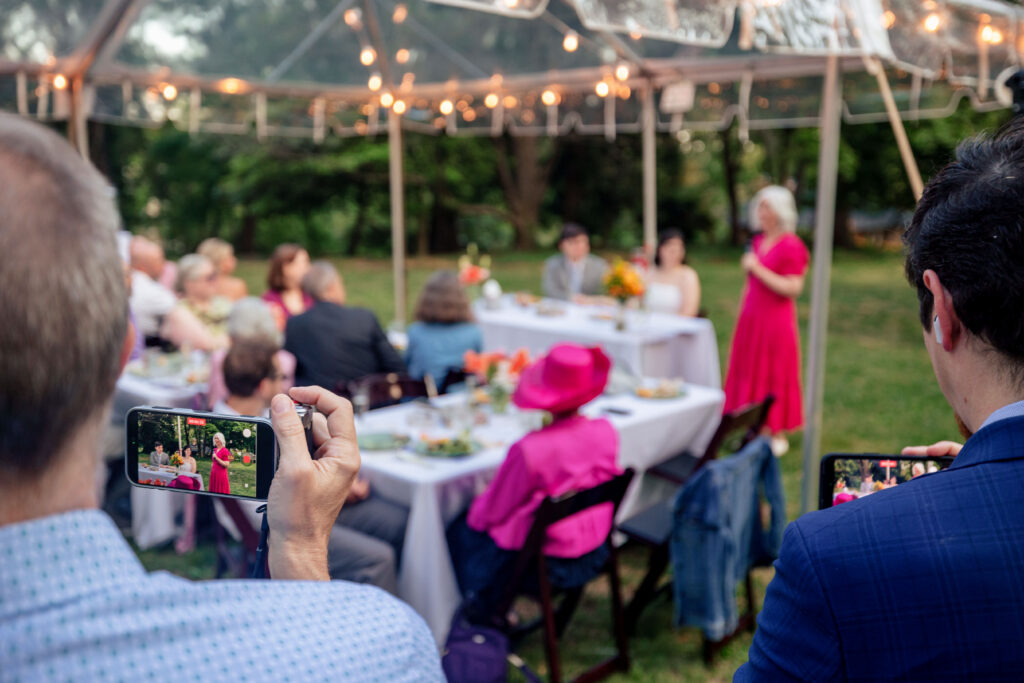
If you and your parents want a video of the speeches, ask one friend or cousin to do the recording, so your immediate family can enjoy and react during the speeches. By Natasha Lamalle Photography
What Is an Unplugged Wedding?
An unplugged wedding is when a couple asks their guests to put away phones, tablets, and cameras during the ceremony, and sometimes the reception, so everyone can be fully present.
It doesn’t have to be all-or-nothing. Most couples go unplugged for the ceremony only, and let the reception run more freely. That’s actually what I recommend, and I’ll explain why below.
Should You Have an Unplugged Wedding Ceremony?
Honestly? For most couples, yes, at least for the ceremony. Here’s why it matters more during the ceremony than anywhere else:
The ceremony is short (usually 20–30 minutes), emotionally loaded, and completely unrepeatable. It’s the part where your guests’ faces matter as much as yours. A sea of present, teary, laughing people tells a completely different story than a sea of screens.
As your photographer, I’m also trying to capture your guests reacting to you, and an aunt leaning into the aisle with an iPhone blocks that shot. Once it’s gone, it’s gone.
The reception is different. People are relaxed, dancing, eating, and celebrating. A guest snapping a photo at the sweetheart table or on the dance floor isn’t the same kind of disruption. You don’t need to be rigid about the whole day.
My recommendation: Go unplugged for the ceremony. Let the reception breathe. If you want a video of the ceremony, ask a friend to record it. If you and your parents want their speech recorded, ask a friend or a cousin to record it. Your immediate family should not be on their phone as I’ll be focusing on their reactions as well.
5 Tips to Make an Unplugged Wedding Actually Work
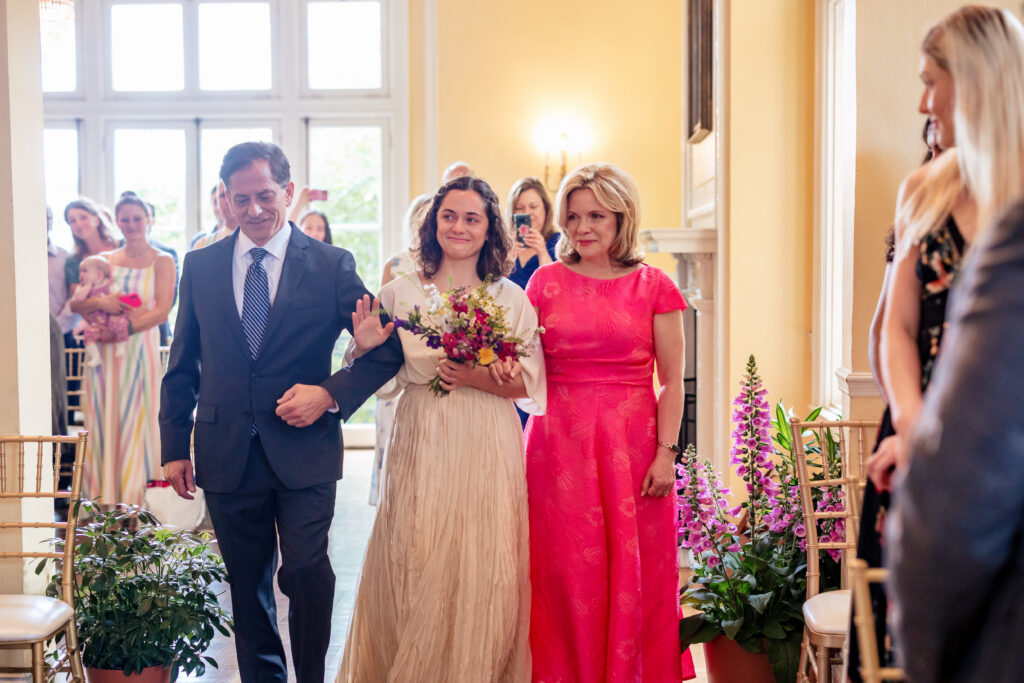
By Natasha Lamalle Photography
1. Put it in the invitation, not just a sign at the door
By the time guests arrive, they’re already in event mode. A sign at the venue entrance is easy to miss or ignore. When the request comes in the invitation, or on your wedding website, people have time to mentally prepare, and it lands as a thoughtful request rather than a last-minute rule. You don’t need a paragraph. One or two sentences are enough:
“We’re having an unplugged ceremony and ask that guests keep phones put away so everyone can be fully present. Professional photos will be shared with you after the wedding.”
2. Have your officiant make the announcement
This is the single most effective thing you can do, and it’s often skipped. Right before the processional begins, have your officiant address the guests directly. It takes 30 seconds, and it works, because it’s warm, it’s in-the-moment, and it comes with authority. A sign is passive, but a person speaking is not. Give your officiant a line or two to work from. Here’s one you can copy:
“Before we begin, the couple has a request: they’d love for you to be fully present with them today. Please silence your phones and tuck them away. Their photographer is here to capture every moment beautifully, and they’ll share those photos with all of you after the wedding. Now, let’s celebrate these two.”
Feel free to adapt the tone to match your officiant’s personality. Warm and casual works just as well as formal.
3. Put up a sign, but make it inviting, not scolding
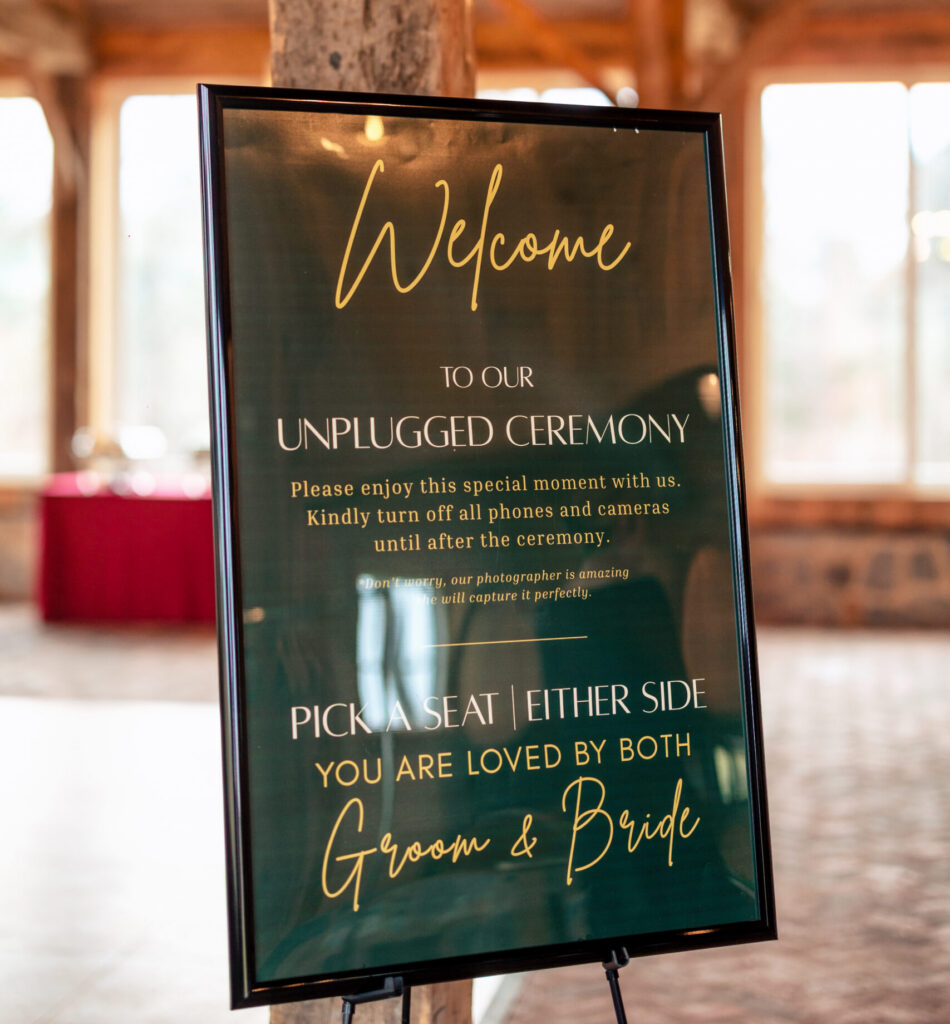
By Natasha Lamalle Photography
You do still want a physical sign, especially for guests who missed the invitation note. But the wording matters. Compare these two:
❌ “Unplugged ceremony. No phones or cameras permitted.”
✅ “We want to see your faces, not your screens. Please put your phones away and enjoy this moment with us. Professional photos will be shared with you after the wedding.”
Same message, completely different feeling: the second one explains why and shows appreciation, and it treats guests like people, not attendees to manage.
A few more sign wording options:
“Unplug and be present. This moment is yours to feel, not photograph.”
“Our photographer has it covered: please keep your phones tucked away and just be here with us.”
“No photos needed: just your love and your presence.”
Place the sign at the ceremony entrance, and optionally on each seat as a small card.
4. Create a “social media moment” during the ceremony and the reception

By Natasha Lamalle Photography
If you want guests to feel included without reaching for their phones at the wrong time, give them a specific, sanctioned moment to use them.
I’ve seen officiants do this beautifully: right at the start of the ceremony, before the vows begin, they pause and say something like:
“Before we ask you to put your phones away, take this moment to snap a photo of the couple together. Got it? Great. Now tuck those phones away and just be here.”
It works because it doesn’t feel like deprivation. Guests get their shot, they feel included, and then they’re genuinely more willing to put the phone down. It also gives the couple a sweet, candid moment at the very start: everyone smiling, phones raised, then lowered.
After the ceremony, the same idea applies at the reception: set up a dedicated photo spot during cocktail hour with your wedding hashtag, and let that be the natural “Instagram moment” for the night.
5. Deliver the professional photos promptly
Here’s the secret behind why unplugged weddings actually work: guests reach for their phones because they want a memento now. When you clearly communicate that beautiful, professional images are coming, and then actually deliver them quickly, it changes the dynamic completely.
When I deliver galleries (sneak peek or full) to my couples, all they have to do is click “share” and send a single link to their entire email list. Every guest can find what they want, download their favorites, and share what they want. No one leaves the wedding feeling as if they walked away with nothing.
What About a Wedding Content Creator?
One newer option worth knowing about: some couples hire a dedicated wedding content creator: someone whose sole job is to capture casual, behind-the-scenes footage and same-day social media content, separate from your photographer and videographer.
This can be a beautiful middle ground if you want an unplugged ceremony but still want that casual, in-the-moment social content from the day. I’ve worked alongside content creators at several weddings, and when it’s done well, everyone’s roles are clear, and it adds something special.
If you’re curious, I’d be happy to recommend someone who’s a great fit for DC-area weddings. Reach out here →
Do You Need a Videographer for an Unplugged Wedding?
Yes, and actually, I’d say this is true regardless of whether you go unplugged.
Photos capture moments. Video captures feeling: the sound of your vows, the laughter during the speeches, the way the room sounded when you walked in. These are things no photo can replicate, and they’re the things you’ll want most when the day is a blur in your memory.
An unplugged ceremony makes this even more important. When guests aren’t filming on their own, you want to know that something is capturing the moving parts. A professional videographer does that, and does it beautifully. Read more about how photographers and videographers work together →
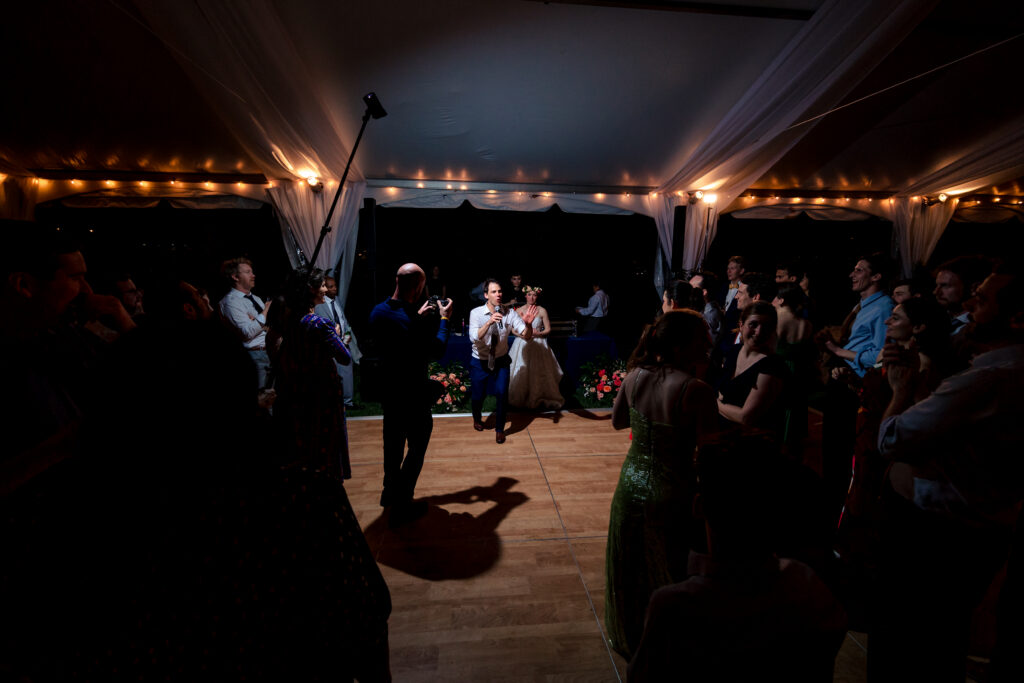
By Natasha Lamalle Photography
The Bottom Line
An unplugged wedding isn’t about control, it’s about presence. You’re inviting the people you love most into one of the most important moments of your life. An unplugged ceremony permits everyone to just be there, without the pressure to document it.
Done right, it creates a completely different atmosphere. Your guests will feel it. You’ll feel it. And your photos will show it.
Planning your wedding day timeline and wondering how photography fits in? Download my free guide: 5 Wedding Day Timeline Examples. It covers everything from first look to last dance, so you’re never rushed on the day that matters most.